
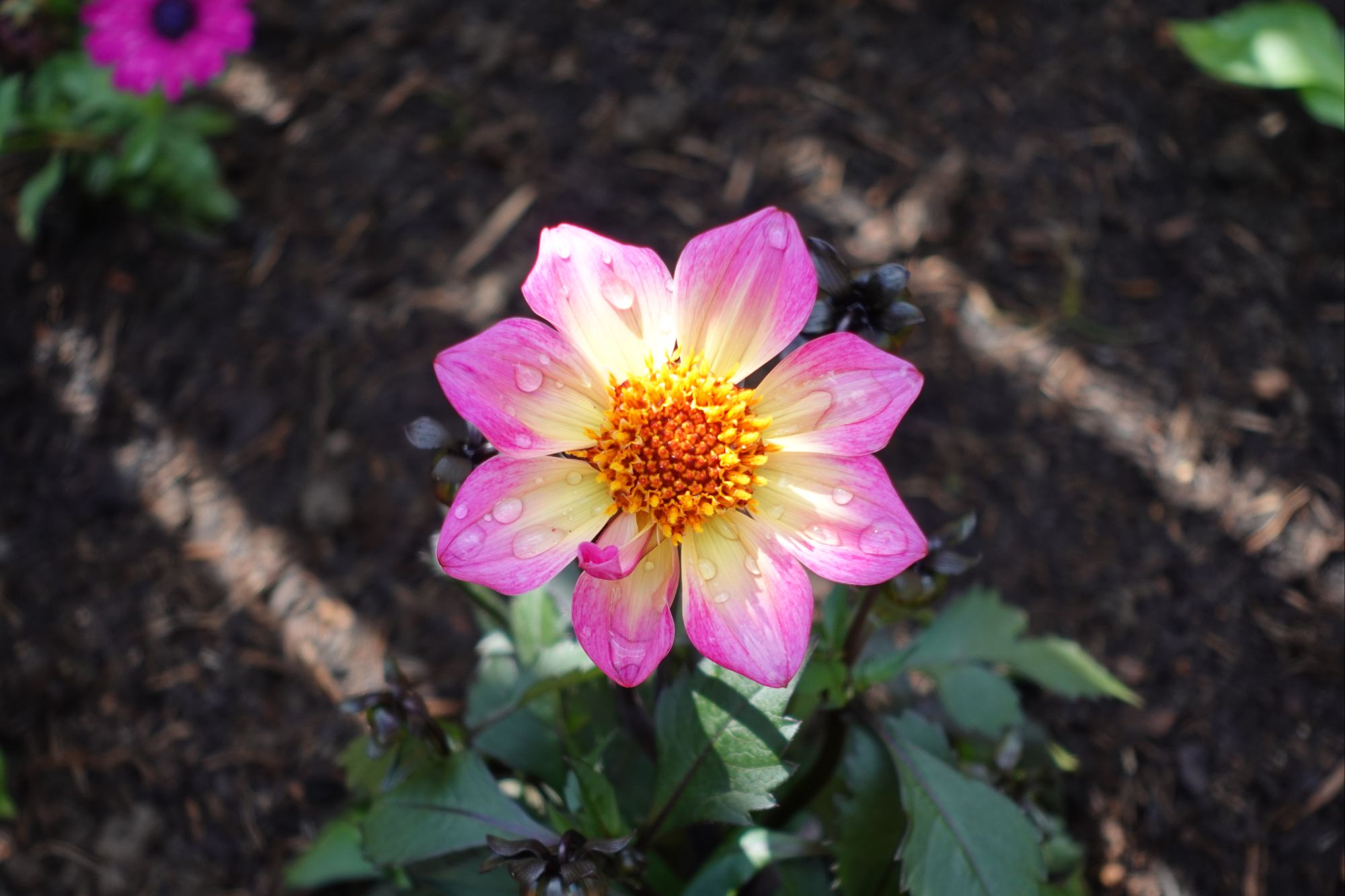
It’s been nearly two years since we moved into our home and we have done quite a bit since moving in, but the garden has always been a bit neglected. This is not to say that we haven’t done anything to it at all, but only the bare minimum to give us something easy to look after.
In the past few months, we’ve been wanting to make it a bit more presentable and wildlife friendly. We sectioned off an area at the back with hopes of making a “wildlife garden” by planting wildflowers, climbing plants, and fruit bearing shrubs – with no luck.

After discussing our woes with a lovely lady at the Corstophine fair, we learned that due to the large willow tree in our neighbours garden, our soil is too dry. We could make it more plant-friendly by incorporating compost and other material to retain water, but I’d rather put the effort into something easier to maintain. So we will leave this corner for nature to take over, whatever can survive there has earned its place, and we’ll build out some new areas for flowers.
Off to the local builders yard I went to acquire some wood, screws, and hopes of a more colourful and nature friendly garden. The following guide will provide enough material to make 3 beds 1.8m x 0.9m x 150mm, although I made 2 beds this size and a smaller, taller bed for a single planter.
Materials
- 9 – 19 x 150 x 1800mm Sawn & Treated Timber Boards
- 1 – 50 x 50 x 4800mm Sawn & Treated Timber Battens, chopped into 1600mm thirds to fit in the car!
- 4⌀ x 50mm Decking Screws, 16 per bed
- 2 x 2m Heavy Duty Polythene Sheeting
- 16mm Tack Nails
Tools
- Tape Measure
- Chop Saw, recommended but a hand saw or circular saw will work just fine
- Drill
- 3⌀ mm Drill Bit
- Screwdriver
- Hammer
- Stanley Knife or Scissors
Guide
- Each bed consists of 3 timber boards, 2 full length and one cut in half. Measure halfway on one board (900mm) and then chop.
- Measure 4 intervals of 150mm in the timber batten and cut, these will be your corner posts.

- To assemble, take your 2 smaller boards and align the corner posts in their positions, drill pilot holes, and then screw in place. You now have your 2 end pieces with attached corner posts.

- Take one of the full-length boards and align with the side piece at a 90° angle, drill pilot holes being careful not to drill into the existing screws, and screw in place. Do the same with the other end piece and repeat for the back full-length board.


- From your polythene sheet trim 3 strips 150mm wide, the easiest way to do this is to get an unused timber board and align with the straight edge and then run the Stanley knife using the board as a guide.
- With these 3 strips, align with the top inner edge of the bed and tack in place, overlapping each piece slightly to protect the wood from the moisture in the soil.

- Ta-da! You now have a raised bed suitable for planting flowers, fill with a mixture of top soil and compost and plant away.
With these beds we plan on planting flowers to hopefully use at our wedding later this year, and for each year to come we can have decoration and colour in our otherwise plain garden – it’ll be some task though to keep Josie out of them and digging everything up when she’s in her cheeky moods.
With the beds complete we did our research on Autumn flowering plants and set off to the garden centre to purchase the following;
- Dahlia
- Cosmos
- Agapanthus (African Lily)
- Scabiosa
- Antirrhinum (Snapdragon)
- Chrysanthemum
- Osteospermum (African Daisy)
- Felicia
After placing the beds in their positions we removed the top layer of grass, tilled the soil, and then incorporated a layer of top soil and compost to fill the planters. I say we, but it was mainly me with Kayla acting as project manager before heading to her actual work 😆.

Now it’s time to get planting, with our haul of flowers purchased and gardening gloves at the ready.


For those interested the other item I made was a 0.9m x 0.25m x 0.3m planter to have another go at a climbing plant for the trellis in the first photo, with a protective sheet on the bottom to retain moisture from the water thief tree.

We also plan on a drought-resistant herb garden for the wild corner consisting of thyme, rosemary, and lavender shrubs. This will be a great asset for me as these are among my favourite herbs, and instead of buying a plastic bag of herbs which will inevitably wilt away in the fridge I can just nip outside and trim exactly what I need.
I love having my own space outdoors and the constant learning that comes with decorating and maintaining a garden. I have really started to appreciate all aspects of nature and wildlife, even more so than before, and being able to provide a habitat for the wildlife is vitally important, especially nowadays where everything seems to be in decline. Being outdoors and even just observing the natural world has been proven to be beneficial for our mental health and general wellbeing by reducing stress and restoring the effects of mental fatigue.
By encouraging nature to come closer to my home life I am bringing these benefits closer to myself in my day to day life. So when if I’m stressed after a day’s work then I know I will have this space, which I have grown and nurtured myself, to relax in and decompress, whilst also providing a vital resource to the urban wildlife which needs it most.
Thanks for reading,
Andrew
Subscribe for updates

Leave a Reply